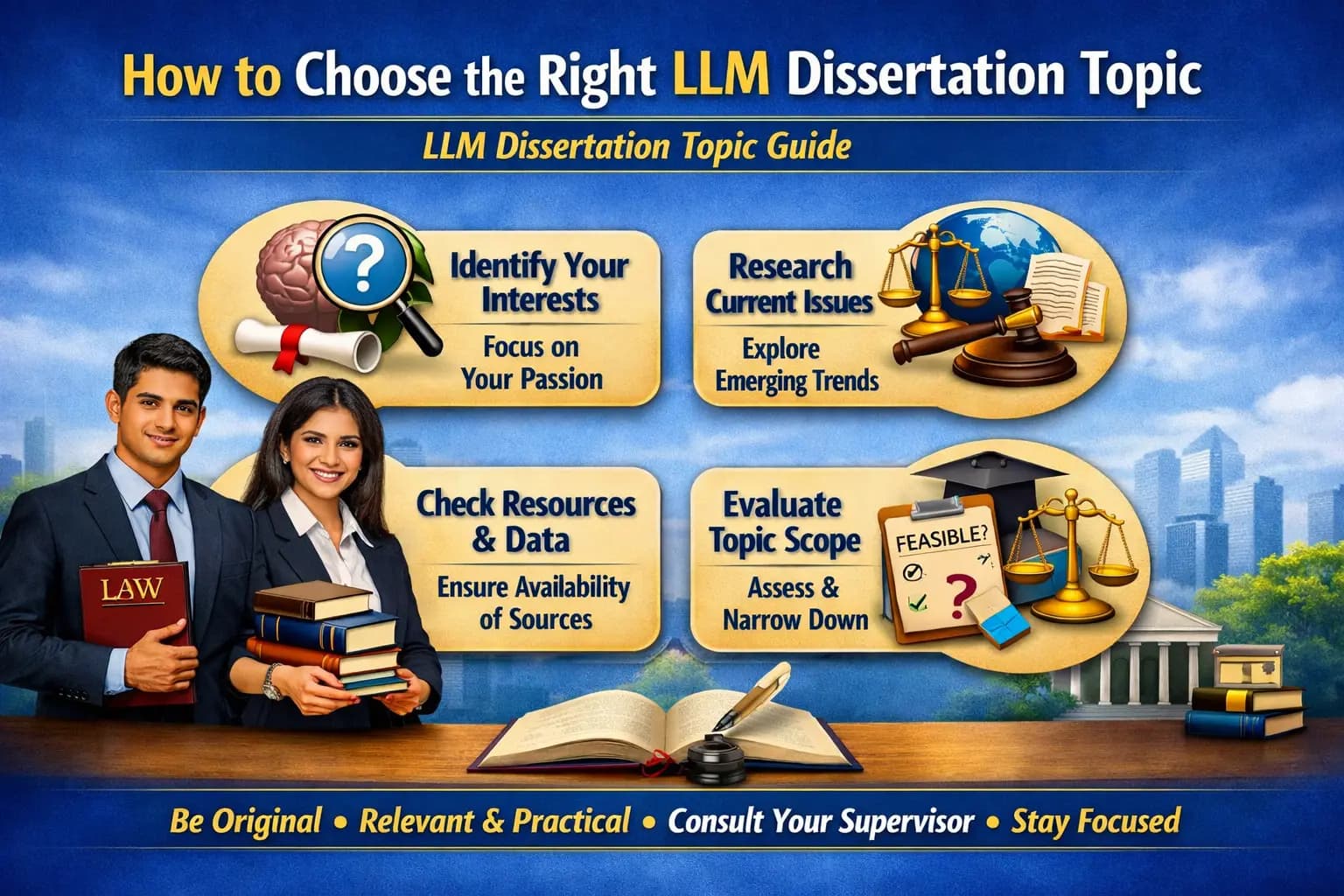
One of the most important milestones in an LLM programme is preparing a dissertation or research project. It allows students to explore a legal issue in depth, develop advanced research skills, and contribute meaningful academic insights.
Choosing the right dissertation topic is often the first challenge. A well-selected topic not only makes research more engaging but also helps students build expertise in a specific area of law that may support future academic or professional goals.
Why is the LLM Dissertation Important?
An LLM dissertation is more than an academic requirement. It demonstrates your ability to:
- Conduct independent legal research
- Analyse complex legal issues
- Interpret statutes and judicial decisions
- Present logical legal arguments
- Apply research methodology
- Develop professional writing skills
The dissertation reflects your academic capabilities and commitment to legal scholarship.
Start with Your Area of Interest
Research becomes easier when the topic genuinely interests you.
Ask yourself:
- Which law subjects do I enjoy the most?
- Which legal issues do I frequently read about?
- Do I want to pursue this specialization in my career?
- Is there a current legal challenge worth studying?
Choosing a topic aligned with your interests keeps you motivated throughout the research process.
Select a Practical Research Topic
Good dissertation topics often address real-world legal questions.
Examples include:
- Digital Privacy Laws
- Artificial Intelligence and Legal Regulation
- Cyber Security Law
- Environmental Governance
- Corporate Compliance
- Constitutional Rights
- Alternative Dispute Resolution
- Intellectual Property in Emerging Technologies
Practical topics encourage deeper analysis and greater academic relevance.
Check the Availability of Research Material
Before finalising your topic, ensure sufficient research resources are available.
Useful sources include:
- Statutes
- Judicial Decisions
- Academic Journals
- Government Reports
- International Legal Documents
- University Libraries
- Research Publications
Reliable sources strengthen the quality of your dissertation.
Keep the Topic Specific
Many students choose topics that are too broad.
For example:
❌ Corporate Law in India
A more focused topic might be:
✔ Corporate Governance and Board Accountability in Listed Companies
A specific topic allows detailed research and meaningful analysis.
Consider Current Legal Developments
Legal research becomes more valuable when it addresses evolving legal issues.
Areas attracting increasing academic attention include:
- Data Protection
- Artificial Intelligence Regulation
- FinTech Law
- ESG Compliance
- Digital Evidence
- Climate Change Law
- Cross-Border Data Transfers
- Online Consumer Protection
Selecting a contemporary topic can make your research more relevant.
Discuss Ideas with Faculty
Faculty members can help students:
- Refine research questions
- Narrow broad topics
- Identify reliable sources
- Improve research methodology
- Strengthen dissertation structure
Constructive feedback early in the process often leads to better outcomes.
Plan Your Research Timeline
Successful dissertations require careful planning.
Create a schedule for:
- Topic Selection
- Literature Review
- Data Collection (if applicable)
- Chapter Writing
- Editing
- Referencing
- Final Review
Breaking the work into smaller stages helps maintain consistent progress.
Common Mistakes to Avoid
Students should avoid:
- Choosing overly broad topics
- Selecting subjects without adequate research material
- Ignoring recent legal developments
- Delaying research work
- Weak referencing
- Poor chapter planning
- Copying existing research
Original analysis is one of the most important aspects of postgraduate legal research.
Skills You Develop During Dissertation Writing
Completing an LLM dissertation strengthens valuable professional skills such as:
- Legal Research
- Critical Thinking
- Academic Writing
- Time Management
- Analytical Reasoning
- Citation Skills
- Problem Solving
- Independent Learning
These competencies are beneficial in legal practice, academia, policy research, and consulting.
Career Benefits of Strong Legal Research
A well-researched dissertation can support future opportunities in:
Higher Education
Students planning doctoral studies develop advanced research experience.
Legal Consultancy
Research expertise supports legal analysis and advisory roles.
Corporate Legal Departments
Strong analytical skills are valuable for compliance and regulatory work.
Policy Research
Government institutions and think tanks value evidence-based legal analysis.
Academic Careers
Universities and research institutions seek candidates with sound legal research abilities.
How Vidyapun Supports LLM Students
Vidyapun believes postgraduate legal education should prepare students for lifelong professional growth.
We provide:
- LLM Admission Guidance
- University Comparison
- Specialization Selection Support
- Academic Counselling
- Career Planning
- Documentation Assistance
- Higher Education Guidance
Our experienced counsellors help students choose recognised universities and LLM programmes that align with their academic interests and long-term career objectives.
Frequently Asked Questions
Why is selecting the right dissertation topic important?
A suitable topic keeps research focused, improves academic quality, and allows students to develop expertise in a chosen area of law.
Can I choose an interdisciplinary research topic?
Yes. Many universities encourage research that combines law with technology, business, public policy, environmental studies, or international relations, depending on programme guidelines.
How long does an LLM dissertation usually take?
The timeline varies across universities and programme requirements. Students should follow their institution's academic schedule.
Should I select a current legal issue?
Current legal developments often provide meaningful research opportunities, provided sufficient academic resources are available.
How can Vidyapun help with LLM admission?
Vidyapun offers expert counselling on university selection, specialization guidance, eligibility assessment, admission support, and career planning for postgraduate law aspirants.
Author's Note
Reviewed by the Vidyapun Education Team
This article is intended for educational purposes only. Dissertation requirements, research methodologies, and academic regulations vary between universities. Students should follow the official academic guidelines provided by their respective institutions.
Conclusion
Choosing the right LLM dissertation topic is one of the most important decisions in postgraduate legal education. A carefully selected, well-researched topic allows students to strengthen analytical thinking, legal writing, and research skills while exploring an area of law that aligns with their future goals. With proper planning, reliable research sources, and expert academic guidance, students can produce meaningful work that supports both academic achievement and professional development.
Website: www.vidyapun.com
Call / WhatsApp: +91 96438 02216
Planning to pursue an LLM? Contact Vidyapun today for expert admission guidance, specialization selection, university comparison, and personalised counselling to help you build a successful future in legal education.