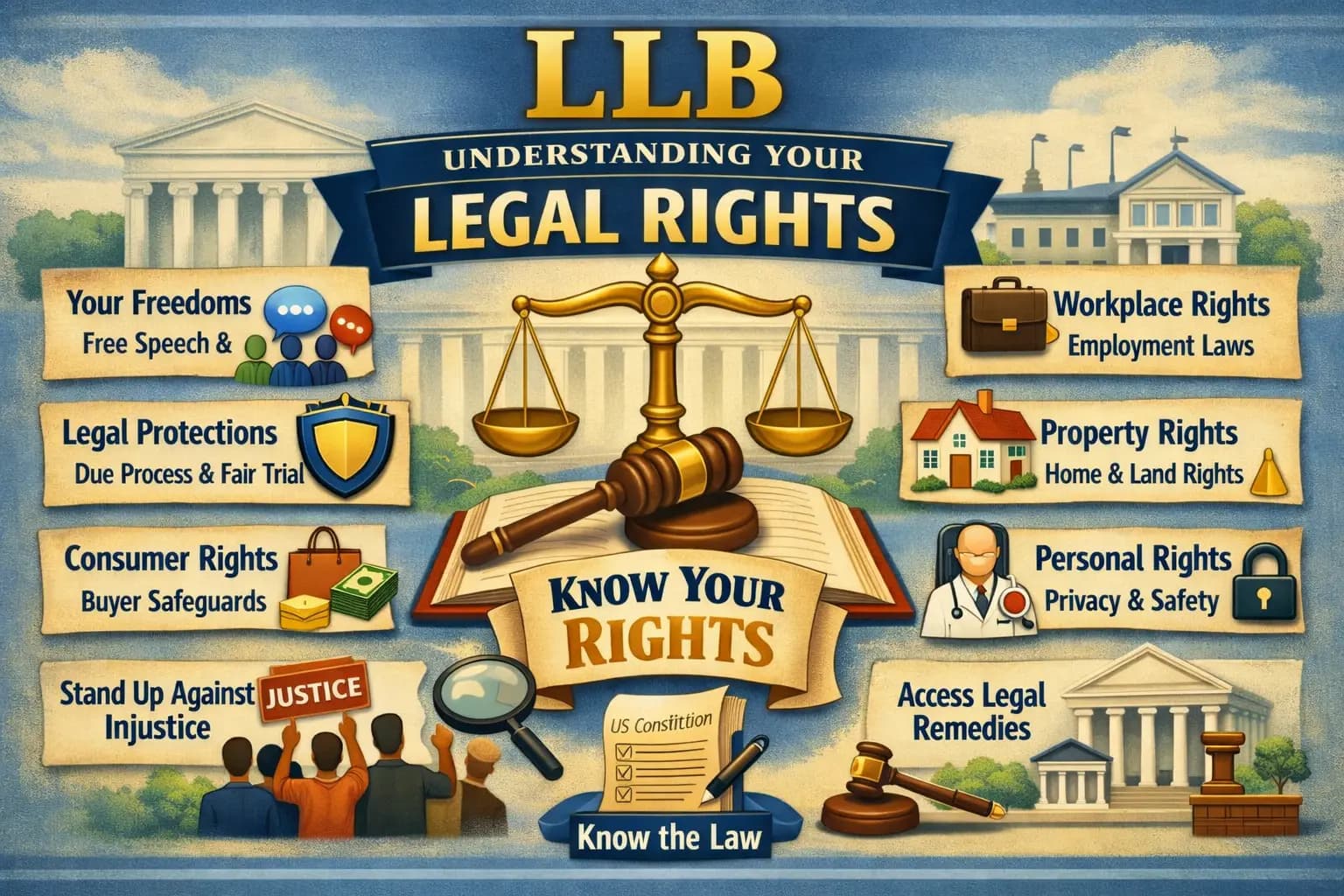
Law affects almost every aspect of daily life—from signing a rental agreement and buying property to starting a business, using digital platforms, or understanding workplace rights. An LLB degree equips students with the knowledge to understand legal systems, protect individual rights, and contribute to society through informed decision-making.
While many people associate an LLB only with becoming an advocate, the programme offers much broader value. It develops legal awareness, critical thinking, and a deeper understanding of the rights and responsibilities that shape everyday life.
What is an LLB Degree?
LLB (Bachelor of Laws) is a professional law programme designed to provide students with a comprehensive understanding of legal principles, judicial systems, and legal procedures.
The curriculum generally includes subjects such as:
- Constitutional Law
- Criminal Law
- Contract Law
- Family Law
- Property Law
- Environmental Law
- Administrative Law
- Labour Law
- Jurisprudence
The exact syllabus may vary depending on the university.
Understanding Your Fundamental Rights
One of the first lessons in legal education is understanding the rights guaranteed under the Constitution.
LLB students learn about:
- Equality before law
- Freedom of speech and expression
- Protection of life and personal liberty
- Freedom of religion
- Constitutional remedies
This knowledge helps students appreciate the legal framework that protects citizens.
Knowing Your Legal Responsibilities
Legal education also teaches that rights are accompanied by responsibilities.
Students understand the importance of:
- Following laws and regulations
- Respecting contractual obligations
- Ethical conduct
- Professional accountability
- Responsible citizenship
A balanced understanding of rights and duties contributes to a stronger legal system.
Developing Legal Awareness
An LLB programme helps students recognise legal issues that arise in everyday situations.
Examples include:
- Consumer protection
- Employment rights
- Digital privacy
- Property transactions
- Family disputes
- Business agreements
This awareness enables graduates to approach legal matters with greater confidence and understanding.
Learning to Think Like a Legal Professional
Legal education encourages structured and logical thinking.
Students learn to:
- Analyse facts objectively
- Identify legal issues
- Evaluate evidence
- Interpret statutes
- Apply legal principles to practical situations
These analytical skills are valuable across multiple professions.
Communication and Legal Writing Skills
An important part of legal education is learning how to communicate clearly and professionally.
Students develop skills in:
- Legal writing
- Drafting documents
- Professional communication
- Presenting legal arguments
- Preparing case summaries
Strong communication supports both legal and non-legal careers.
Legal Knowledge Beyond the Courtroom
An LLB degree is useful even for students who do not intend to practice law.
Legal knowledge benefits professionals working in:
- Business
- Banking
- Insurance
- Human Resources
- Compliance
- Public Administration
- Education
- Non-Governmental Organisations
Understanding legal frameworks improves decision-making across many industries.
Building Ethical Decision-Making Skills
Ethics play a central role in legal education.
Students learn the importance of:
- Integrity
- Fairness
- Confidentiality
- Professional responsibility
- Respect for justice
These values help build trust in professional environments.
Preparing for Diverse Career Opportunities
An LLB degree provides a foundation for various professional pathways.
Graduates may explore careers in:
Litigation
Representing clients and assisting in legal proceedings.
Corporate Legal Departments
Supporting organisations with legal compliance and business regulations.
Legal Consultancy
Providing legal guidance to businesses and individuals.
Compliance and Risk Management
Helping organisations comply with legal and regulatory requirements.
Public Service
Working with government departments, regulatory bodies, or public institutions.
Higher Education
Pursuing postgraduate legal studies and academic research.
How to Make the Most of Your LLB Programme
Students can maximise their learning by:
- Reading landmark judgments regularly
- Following legal developments
- Participating in seminars and workshops
- Improving legal writing
- Completing internships
- Engaging in academic discussions
- Building professional networks
Continuous learning strengthens both academic and professional development.
Why Choose Vidyapun?
Choosing the right university is the first step toward a successful legal education.
Vidyapun provides:
- LLB Admission Guidance
- University Comparison
- Eligibility Assessment
- Documentation Support
- Career Counselling
- Course Selection Assistance
- Higher Education Guidance
Our experienced counsellors help students identify recognised universities that align with their educational goals and career aspirations.
Frequently Asked Questions
Is an LLB degree only useful for becoming an advocate?
No. An LLB degree can also support careers in corporate organisations, compliance, legal consulting, public administration, education, research, and many other fields.
What skills does an LLB programme develop?
Students develop analytical thinking, legal research, communication, legal writing, problem-solving, and ethical decision-making skills.
Does studying law improve legal awareness?
Yes. Legal education helps students understand legal rights, responsibilities, and the practical application of laws in everyday situations.
Can I pursue higher studies after LLB?
Yes. Eligible graduates may pursue postgraduate legal education, specialised certifications, or research programmes, depending on university requirements.
How can Vidyapun help with LLB admission?
Vidyapun provides expert guidance on university selection, admissions, eligibility, documentation, and career planning for students interested in legal education.
Author's Note
Reviewed by the Vidyapun Education Team
This article is intended for general educational purposes. Course structures, eligibility requirements, and legal education policies may vary across universities. Students should consult official university sources for the latest programme details.
Conclusion
An LLB degree offers much more than legal knowledge—it helps students understand their rights, fulfil their responsibilities, think critically, and make informed decisions in both personal and professional life. Whether your ambition is to practice law or work in another sector, the knowledge and skills gained through legal education provide a strong foundation for lifelong learning and career growth.
Website: www.vidyapun.com
Call / WhatsApp: +91 96438 02216
Begin your legal education with confidence. Contact Vidyapun today for expert guidance on LLB admissions, recognised universities, and personalised career counselling to help you build a successful future in law.