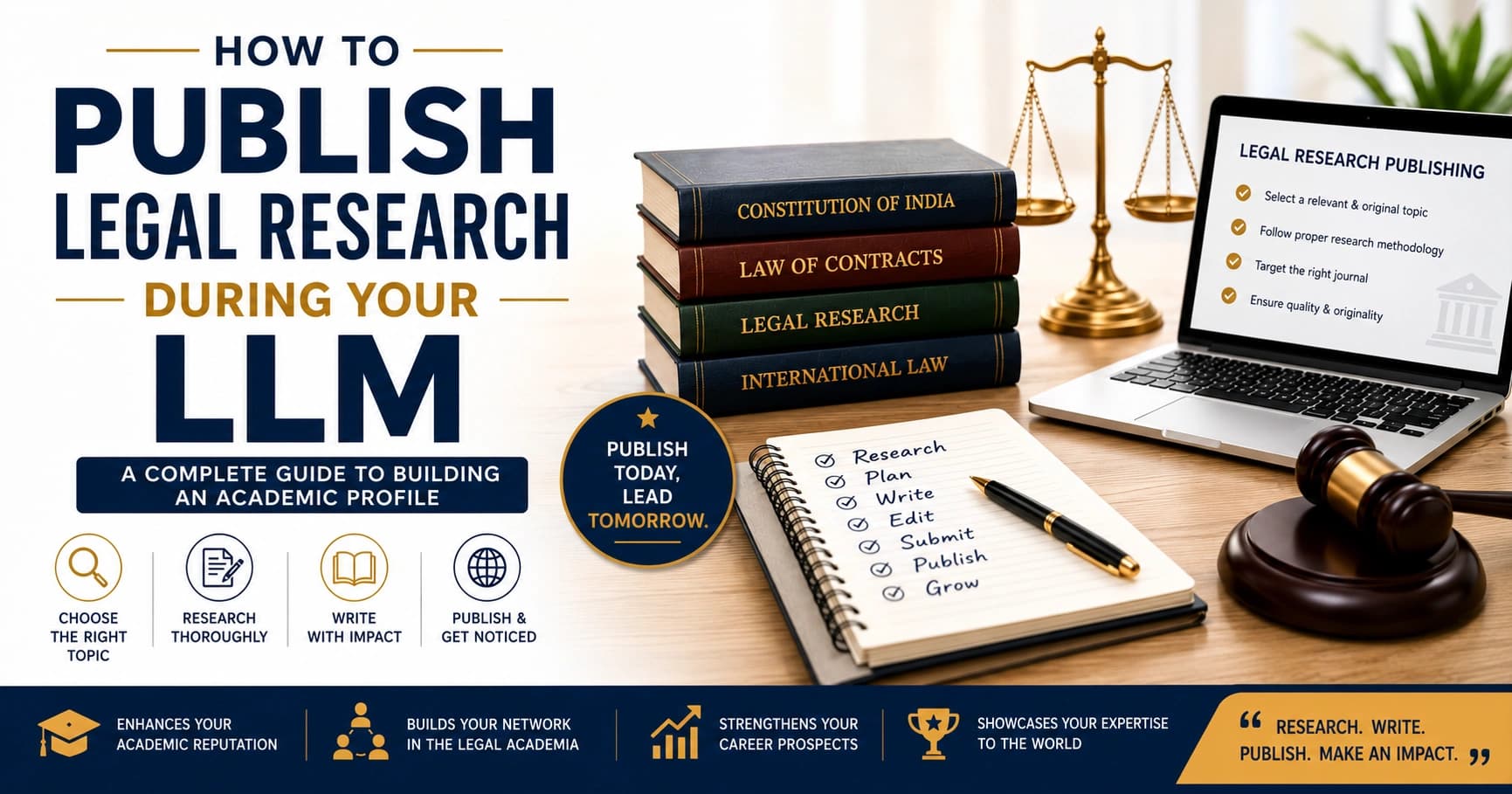
Pursuing a Master of Laws (LLM) is an excellent opportunity to develop advanced legal knowledge, strengthen research abilities, and establish yourself as a specialist in your chosen field of law. If you're planning to pursue or are already enrolled in the Master of Laws (LLM) Course, publishing legal research can become one of the most valuable achievements of your academic journey.
A well-published legal research paper not only demonstrates your analytical skills but also strengthens your profile for careers in academia, corporate legal departments, think tanks, policy organizations, law firms, and PhD admissions.
Whether you completed your Bachelor of Laws (LLB) or an integrated BA LLB Course, developing research skills during your LLM can help you stand out in today's competitive legal profession.
Why Research Publications Matter During an LLM
Legal research contributes to the evolution of laws, judicial decisions, and public policy. Publishing research demonstrates your ability to analyze complex legal issues, propose practical solutions, and communicate ideas effectively.
Some key benefits include:
- Building academic credibility
- Strengthening your professional CV
- Enhancing legal writing skills
- Preparing for PhD admissions
- Improving career opportunities
- Establishing subject-matter expertise
- Increasing visibility within the legal community
Step 1: Choose a Research Area That Interests You
Selecting the right topic is the foundation of successful legal research. Your research should reflect both your interests and current legal developments.
Popular LLM research areas include:
- Constitutional Law
- Corporate Law
- Cyber Law
- Criminal Law
- Human Rights Law
- Intellectual Property Rights
- International Law
- Environmental Law
- Artificial Intelligence & Law
- Data Privacy Law
If you're unsure how to select a research topic, read our guide on How to Choose the Right LLM Dissertation Topic: A Step-by-Step Guide.
Step 2: Identify a Clear Research Problem
Rather than selecting a broad subject, focus on a specific legal issue.
For example:
- Regulation of Artificial Intelligence
- Copyright issues involving AI-generated content
- Cryptocurrency regulations
- Data protection in healthcare
- Cybersecurity compliance
A focused research question helps produce more practical and publishable work.
Step 3: Conduct a Comprehensive Literature Review
Before writing your paper, review:
- Supreme Court judgments
- High Court decisions
- Government reports
- International treaties
- Law Commission Reports
- Peer-reviewed journals
- Academic books
A thorough literature review helps you identify research gaps and build original arguments.
Step 4: Follow a Structured Research Methodology
A quality legal research paper generally includes:
- Title
- Abstract
- Introduction
- Literature Review
- Research Methodology
- Legal Analysis
- Findings
- Recommendations
- Conclusion
Maintaining a logical structure improves readability and publication quality.
Step 5: Improve Your Legal Writing Skills
Legal writing should be:
- Clear
- Precise
- Logical
- Evidence-based
- Objective
Strong legal writing develops through regular practice and continuous learning.
To further strengthen your academic profile, read Build a Strong Legal Profile During Your LLM: Skills That Make You Stand Out.
Step 6: Use Reliable Legal Sources
Support every argument with credible references, including:
- Statutes
- Judicial precedents
- Government notifications
- International conventions
- Peer-reviewed journals
- Official reports
Reliable sources improve the credibility of your research.
Step 7: Follow Proper Citation Standards
Most legal journals require citation formats such as:
- OSCOLA
- Bluebook
- APA (where applicable)
Always review the journal's author guidelines before submission.
Step 8: Choose the Right Journal
When selecting a journal, evaluate:
- Subject relevance
- Peer-review process
- Publication timeline
- Submission guidelines
- Ethical standards
Publishing in an appropriate journal increases your chances of acceptance.
Step 9: Maintain Academic Integrity
Avoid plagiarism by:
- Writing original content
- Properly citing all references
- Quoting accurately
- Reviewing your manuscript carefully before submission
Academic honesty is essential for building long-term credibility.
Step 10: Seek Faculty Guidance
Faculty mentors can help improve:
- Research questions
- Legal analysis
- Writing quality
- Methodology
- Citations
- Overall structure
Constructive feedback significantly improves publication quality.
Skills You Develop Through Research Publishing
Publishing research during your LLM strengthens important professional skills, including:
- Legal Research
- Critical Thinking
- Academic Writing
- Legal Analysis
- Policy Evaluation
- Problem Solving
- Communication Skills
- Time Management
- Independent Learning
These skills remain valuable throughout your legal career.
Career Benefits of Publishing During an LLM
Publishing legal research can support careers in:
- Law Firms
- Corporate Legal Departments
- Universities
- Think Tanks
- Government Organizations
- International Institutions
- Policy Research Organizations
- Legal Consultancy
Students who begin developing research skills during their Bachelor of Laws (LLB) often find it easier to transition into advanced legal research through the Master of Laws (LLM) Course.
Future Trends in Legal Research
Modern legal research increasingly focuses on:
- Artificial Intelligence Regulation
- Legal Technology
- Data Privacy
- ESG Compliance
- Cyber Law
- Climate Change Law
- FinTech Regulation
- Digital Evidence
- Online Dispute Resolution
These emerging areas present exciting opportunities for future legal scholars.
Conclusion
Publishing legal research during your Master of Laws (LLM) is one of the most effective ways to strengthen your academic profile, improve your legal writing skills, and establish yourself as a knowledgeable legal professional. Whether your goal is to pursue a career in litigation, corporate law, academia, legal consulting, or policy research, developing strong research and publication skills during your LLM can create valuable opportunities for long-term career growth.
If you're planning to advance your legal education, explore the Master of Laws (LLM) Course, Bachelor of Laws (LLB), and BA LLB Course at Vidyapun to find the right program for your academic and professional goals. Our admission experts are here to guide you through eligibility, university selection, and the admission process.
🌐 Website: www.vidyapun.com
📞 Call / WhatsApp: +91 96438 02216
Start your journey toward a successful legal career today with Vidyapun and take the next step toward becoming a skilled legal professional.