
Every BA LLB student hears the same advice early on: "your research skills will make or break you." It's true — but rarely explained in practical terms. This guide breaks down exactly what legal research skills you need, which databases and methods to use, and how to build a research routine that actually holds up under assignment deadlines and moot court pressure.
Why Legal Research Skills Matter From Day One of BA LLB
Legal research isn't a skill you pick up later in practice — it's foundational to almost everything you'll do in law school itself.
From Assignments to Real Practice
Every case comment, moot memorial, project submission, and internship task will ask you to locate, read, and apply relevant case law and statutes — meaning weak research skills quietly hold back your performance across nearly every part of the course.
A Skill Recruiters Actively Look For
Law firms and litigation chambers routinely test research ability during internship and job interviews, because it's one of the clearest indicators of how quickly a new associate can become genuinely useful.
Core Legal Research Methods Every Student Should Know
There isn't just one way to "do" legal research — different tasks call for different approaches.
Doctrinal (Library-Based) Research
This is the classic method: working through statutes, case law, commentaries, and journal articles to build a thorough understanding of the legal position on a specific issue.
Statutory and Case Law Interpretation
Beyond just locating the relevant law, you need to interpret it correctly — understanding how courts have read a statute's language, and how precedent has shaped or narrowed its application over time.
Best Legal Databases and Resources for Law Students
Knowing where to look is half the battle, and most students only discover the full range of available resources partway through their degree.
Free and Student-Accessible Legal Databases
Platforms like Indian Kanoon, SCC Online (often available through your college's subscription), and Manupatra are the most commonly used starting points for case law and statutory research in India.
Using Your College Library and Journals
Don't overlook your college's physical and digital library — commentaries, treatises, and law journals often provide the deeper doctrinal analysis that a quick database search won't surface.
How to Research Case Law Effectively
Case law research specifically has its own learning curve, separate from general legal research.
Finding Relevant Precedents
Start broad with keyword searches, then narrow down using citation trails — checking which later cases cited your initial result — to find the most directly relevant and recent precedents.
Understanding Citations and Case Summaries
Learn to read a case citation correctly and get comfortable skimming a headnote or summary first to judge relevance, before committing time to reading the full judgment.
Building a Legal Research Routine That Works
Good research habits compound — students who build a system early save enormous time later in the degree.
Organising Notes and Sources
Keep a consistent system (a simple spreadsheet or document works fine) logging the case name, citation, key holding, and why it's relevant — this saves you from re-searching the same material for a later assignment or moot.
Practicing Research Through Assignments and Moots
Treat every project and moot court problem as research practice, not just a task to complete — the repetition is what actually builds research speed and accuracy over time.
Common Legal Research Mistakes to Avoid
A few recurring habits slow students down far more than they realise.
Relying Only on Google or Secondary Sources
General web searches and secondary commentary can point you in the right direction, but they're not a substitute for reading the actual statute or judgment — always verify against the primary source before citing it.
Not Verifying if a Judgment Is Still Good Law
One of the most common (and most damaging) research mistakes is citing a case that's since been overruled or distinguished — always check a judgment's subsequent treatment before relying on it in an assignment or moot.
Final Thoughts
Legal research skills aren't something you either have or don't — they're built through repetition, the right tools, and a system for organising what you find. Start using proper databases early, practice through every assignment and moot rather than treating research as a chore, and you'll notice the difference in both your grades and your confidence well before you graduate.
Want to see how your BA LLB profile is shaping up? Check Your Admission Chances with Vidyapun's free assessment tool.
Frequently Asked Questions
Q1. What are the most important legal research skills for a BA LLB student?
A: The ability to locate relevant statutes and case law, interpret them correctly, verify whether a judgment is still good law, and organise your findings clearly are the core skills every student needs.
Q2. Which legal databases should BA LLB students use?
A: Indian Kanoon, SCC Online, and Manupatra are the most commonly used platforms for Indian case law and statutory research, alongside your college library's journal subscriptions.
Q3. What is doctrinal legal research?
A: Doctrinal research is the traditional, library- and database-based method of researching statutes, case law, and legal commentary to build a thorough understanding of the law on a specific issue.
Q4. How do I know if a court judgment is still valid law?
A: Check the judgment's subsequent citation history in a legal database to see if it has been overruled, distinguished, or upheld by a later, higher court decision.
Q5. Can I rely on Google for legal research?
A: General web searches can help you get oriented, but you should always verify findings against the primary source (the actual statute or judgment) rather than relying solely on secondary summaries.
Q6. How can I improve my legal research speed as a student?
A: Practice consistently through assignments and moot court problems, keep an organised research log, and get comfortable using citation trails to move quickly between related cases.
🌐 Website: www.vidyapun.com 📞 Call / WhatsApp: +91 96438 02216
Free admission guidance
Tell us what you are looking for. A counsellor will call you.
Read next
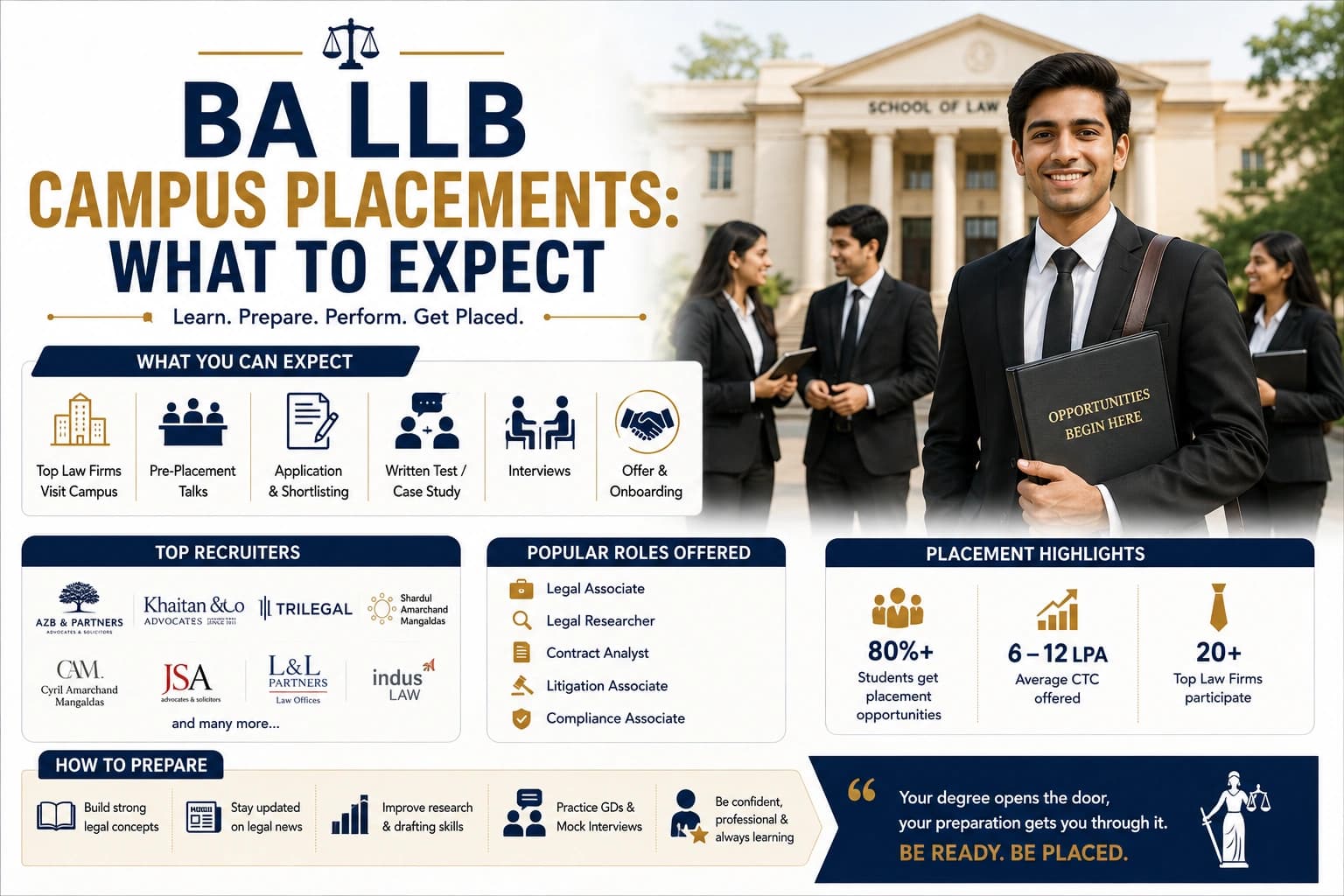
BA LLB Campus Placements: What to Expect
A realistic guide to BA LLB campus placements — how the process works, what placement statistics actually mean, typical recruiters, and how to prepare.
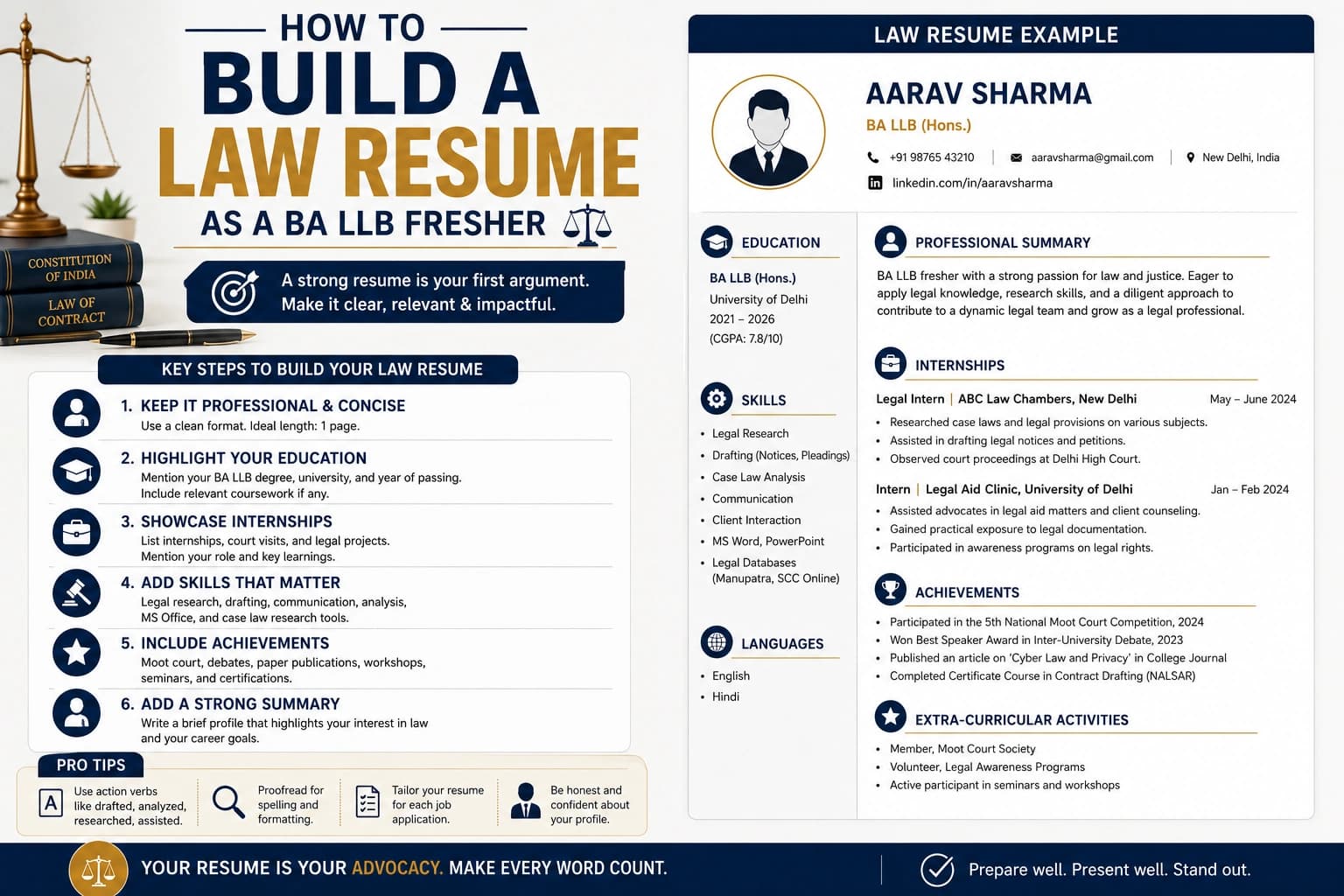
How to Build a Law Resume as a BA LLB Fresher
A practical, section-by-section guide to building a strong law resume as a BA LLB fresher — structure, internships, moot court, formatting, and mistakes to avoid.

How to Crack Law Firm Interviews After BA LLB
A practical, step-by-step guide to preparing for and cracking law firm interviews after BA LLB — common questions, technical rounds, and mistakes to avoid.
Most read on Vidyapun
Comments
0No comments yet
Be the first to share your thoughts!