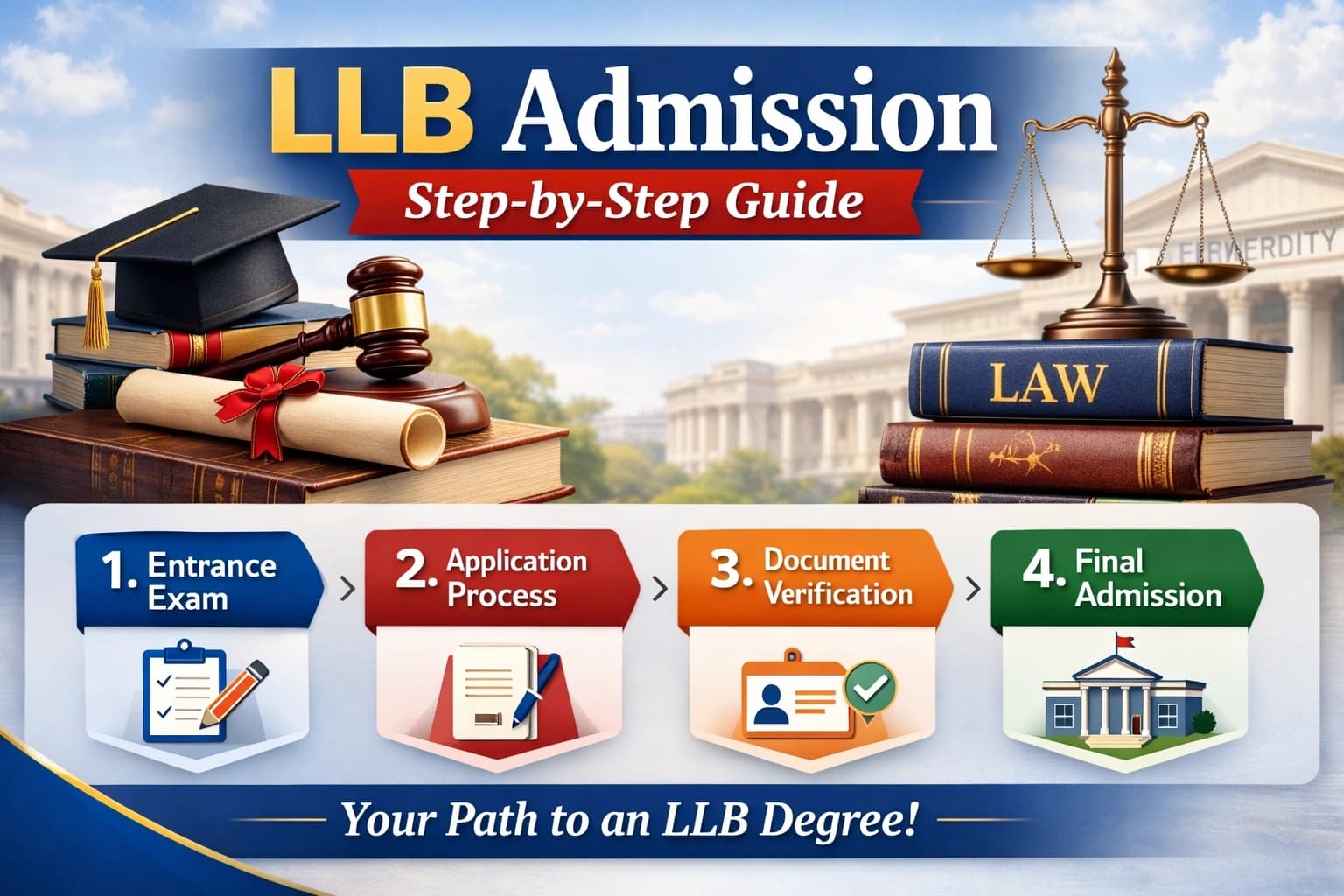
Looking to Start Your Career in Law?
A Bachelor of Laws (LLB) is one of the most respected professional degrees for students who wish to build a career in the legal profession. Whether your goal is to become an advocate, legal consultant, corporate lawyer, legal researcher, or pursue higher studies, an LLB provides the foundation required to enter the legal field.
However, choosing the right university, understanding eligibility requirements, and planning your admission carefully are essential for a successful academic journey.
This guide explains everything you need to know about LLB Admission, from eligibility and the admission process to career opportunities and university selection.
What is an LLB Programme?
An LLB (Bachelor of Laws) is an undergraduate law degree designed to provide students with a comprehensive understanding of legal principles, constitutional frameworks, civil and criminal law, legal procedures, and professional ethics.
Students who have already completed a bachelor's degree in disciplines such as Arts, Commerce, Science, Management, or Engineering often choose the three-year LLB programme to transition into the legal profession.
The curriculum combines classroom learning with practical exposure through internships, legal research, moot courts, and case studies.
Why Choose an LLB?
An LLB opens the door to diverse career opportunities beyond traditional litigation.
Benefits of pursuing an LLB include:
- Strong understanding of legal systems
- Multiple career opportunities
- Professional credibility
- Opportunities in corporate and government sectors
- Foundation for higher education
- Development of analytical and communication skills
- Exposure to practical legal training
Law graduates are valued in sectors where legal knowledge and regulatory understanding are essential.
LLB Admission Eligibility
Eligibility requirements vary among universities, but applicants generally need to meet the following criteria:
Educational Qualification
A bachelor's degree from a recognised university.
Academic Performance
Universities may specify minimum qualifying marks as part of their admission policy.
Admission Method
Admission may be based on:
- Entrance examinations
- Merit-based selection
- Institution-specific admission procedures
Applicants should always review the latest admission guidelines published by their chosen university.
Step-by-Step LLB Admission Process
Step 1: Identify Your Career Goals
Consider whether you are interested in:
- Litigation
- Corporate Law
- Judiciary
- Legal Consultancy
- Public Policy
- Legal Research
Your career aspirations can help you choose the right programme and university.
Step 2: Shortlist Universities
Compare institutions based on:
- Recognition
- Curriculum
- Faculty
- Practical Learning
- Student Support
- Career Services
Choosing the right university is an important part of your legal education.
Step 3: Check Eligibility Requirements
Before applying, carefully review:
- Educational qualifications
- Admission criteria
- Required documents
- Application timelines
Meeting the eligibility requirements helps ensure a smooth admission process.
Step 4: Prepare Required Documents
Applicants should keep the following documents ready:
- Graduation Mark Sheets
- Degree Certificate
- Identity Proof
- Passport-size Photographs
- Address Proof
- Category Certificate (if applicable)
Proper documentation can help avoid delays during the admission process.
Step 5: Submit the Application
Complete the application form accurately and upload the required documents within the specified deadline.
Step 6: Confirm Admission
Once your application is accepted and the required formalities are completed, follow the university's instructions to confirm your admission.
Subjects Covered in an LLB Programme
Students typically study a broad range of legal subjects, including:
- Constitutional Law
- Contract Law
- Criminal Law
- Family Law
- Property Law
- Company Law
- Labour Law
- Environmental Law
- Administrative Law
- Intellectual Property Rights
- Cyber Law
- Taxation Law
The curriculum may vary depending on the university.
Skills You Develop During an LLB
An LLB programme helps students build practical and professional skills such as:
- Legal Research
- Legal Drafting
- Analytical Thinking
- Communication
- Negotiation
- Client Counselling
- Problem Solving
- Public Speaking
- Critical Reasoning
- Ethical Decision-Making
These competencies are valuable across various legal careers.
Career Opportunities After LLB
Graduates can pursue careers in:
Advocate
Represent clients in courts and legal proceedings after fulfilling applicable professional requirements.
Corporate Lawyer
Advise businesses on contracts, governance, compliance, and commercial transactions.
Legal Consultant
Provide legal guidance to organisations and individuals.
Compliance Officer
Support organisations in meeting legal and regulatory obligations.
Legal Advisor
Assist businesses with legal decision-making and risk management.
Legal Researcher
Conduct legal research for universities, think tanks, and policy organisations.
Public Policy Professional
Contribute to legal reforms and policy development.
Higher Education After LLB
Students interested in advanced legal education may pursue:
- LLM
- PhD in Law
- Diploma Programmes
- Professional Certification Courses
Higher education can support specialization and academic careers.
Tips for Choosing the Right Law University
Before taking admission, evaluate:
- University recognition
- Experienced faculty
- Updated curriculum
- Moot court activities
- Internship opportunities
- Research facilities
- Placement and career support
- Alumni network
A well-chosen university can contribute significantly to your academic and professional development.
Common Mistakes to Avoid
Avoid these common admission mistakes:
- Applying without checking eligibility.
- Ignoring university recognition.
- Choosing a programme based only on fees.
- Missing application deadlines.
- Not comparing curriculum and student support.
- Failing to plan your long-term career goals.
Research and planning can help you make informed decisions.
Why Choose Vidyapun?
Navigating the admission process can be challenging without proper guidance.
Vidyapun supports students through:
- LLB Admission Counselling
- University Comparison
- Eligibility Assessment
- Documentation Assistance
- Application Support
- Career Counselling
- Course Selection Guidance
Our experienced counsellors help students identify programmes that align with their career aspirations.
Frequently Asked Questions
Who can apply for an LLB programme?
Students who have completed a recognised bachelor's degree are generally eligible to apply, subject to university-specific admission requirements.
Is an LLB a good career choice?
An LLB provides opportunities in litigation, corporate law, legal consultancy, public service, research, and higher education. Career outcomes depend on individual interests, skills, and experience.
Can I pursue an LLM after completing an LLB?
Yes. Graduates from recognised LLB programmes are generally eligible to apply for LLM courses, subject to university admission policies.
What skills are important for law students?
Legal research, communication, analytical thinking, drafting, negotiation, and ethical judgment are among the key skills developed during legal education.
How can Vidyapun help with LLB admission?
Vidyapun offers personalised guidance on university selection, eligibility, documentation, admissions, and career planning to help students make informed decisions.
Author's Note
Reviewed by the Vidyapun Education Team
This article is intended to provide general educational guidance regarding LLB admissions. Admission policies, eligibility requirements, and programme structures may differ across universities. Students should verify the latest information directly with the respective institution before applying.
Conclusion
An LLB is the gateway to a rewarding legal career and offers opportunities across litigation, corporate law, government, research, and academia. By understanding the admission process, selecting a recognised university, and developing practical legal skills, students can build a strong foundation for long-term professional success.
Careful planning, informed decision-making, and expert guidance can make your admission journey smoother and more rewarding.
Contact Us
Looking for expert guidance on LLB admissions?
Vidyapun helps students compare recognised universities, understand eligibility requirements, and complete the admission process with confidence.
🌐 Website: www.vidyapun.com
📞 Call / WhatsApp: +91 96438 02216
Contact Vidyapun today and take the first step toward a successful career in law.