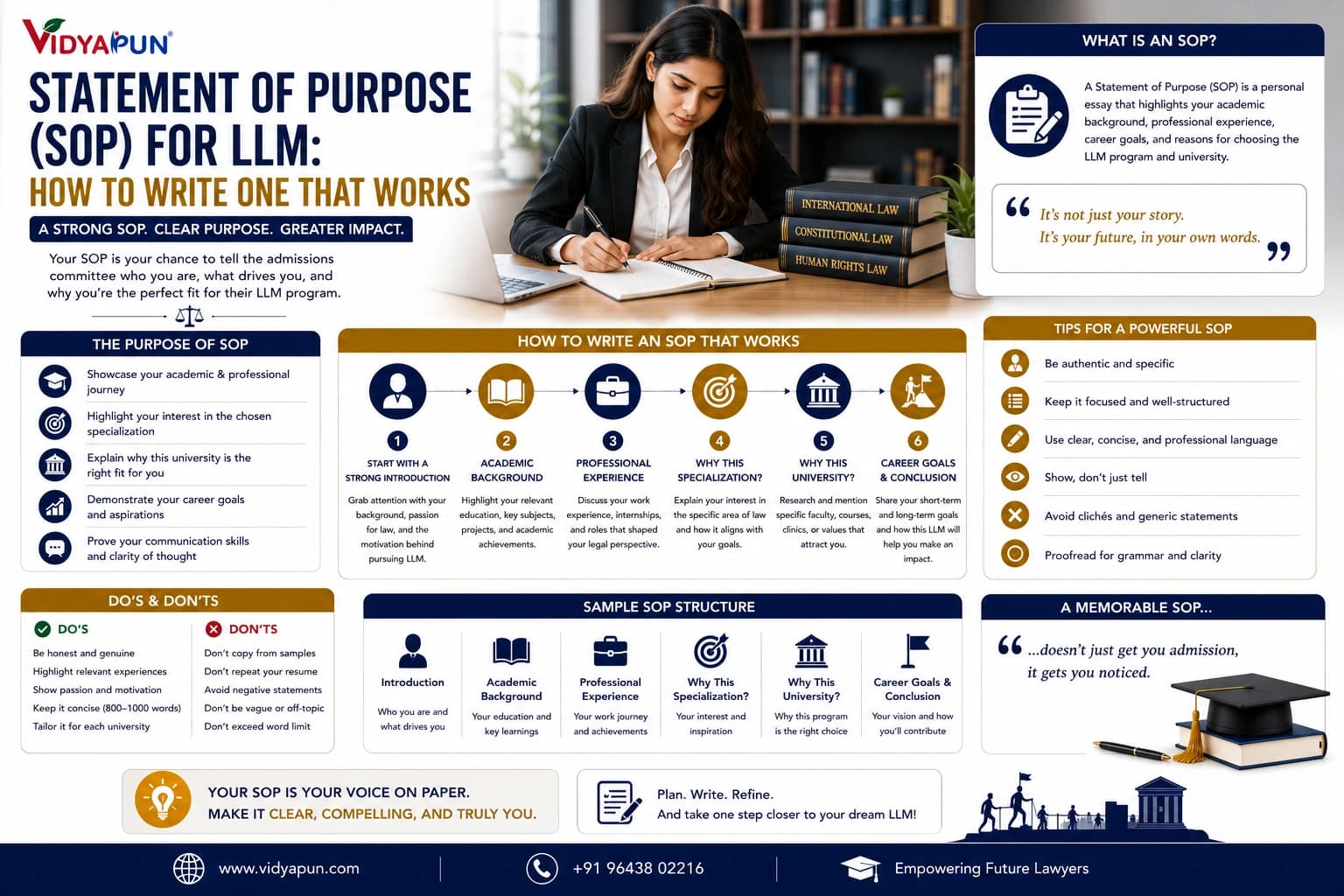
A strong LLB record and a clear specialization choice can still be let down by a generic, forgettable statement of purpose. At many universities, particularly those weighing more than just your academic percentage, the SOP is where an admission committee actually gets a sense of you as a candidate — and a vague or templated one rarely leaves a strong impression.
This guide covers how to actually structure an LLM SOP, what genuinely strengthens it, and how to tailor it depending on your specific background.
What Is a Statement of Purpose and Why It Matters for LLM
Understanding what this document is actually meant to do shapes how you approach writing it.
What Admission Committees Actually Look For
Admission committees generally use the SOP to assess genuine motivation, clarity of purpose, and fit between your background and their program — not to test your writing style in isolation. They're looking for evidence that you've thought seriously about why this specialization and this university, specifically.
Why a Weak SOP Can Undermine a Strong Application
At universities where the SOP genuinely factors into admission decisions, a generic or poorly reasoned statement can weaken an otherwise strong academic profile, since it signals a lack of genuine engagement with the specific program rather than a deliberate, informed choice.
Before You Start Writing: What to Figure Out First
The strongest SOPs are written after this groundwork, not before it.
Why This Specialization, Specifically
Before drafting anything, be clear with yourself about why your chosen specialization genuinely interests you — ideally grounded in specific LLB coursework, internships, or experiences, rather than a general sense that the area sounds interesting or lucrative.
Why This University, Specifically
Research the specific university's faculty, research strengths, and program structure in your chosen specialization. A statement that could apply to any university signals you haven't done this research, which admission committees notice.
How to Open Your SOP
Your opening sets the tone for everything that follows.
A Genuine Hook, Not a Cliché
Avoid opening with broad, generic statements like "Since childhood, I have been passionate about law." Instead, open with something specific and genuine — a particular case, internship experience, or moment that shaped your interest in your chosen specialization.
Common Opening Mistakes to Avoid
Overly dramatic or clichéd openings, generic statements about the importance of law in society, or immediately listing your qualifications without context are common weak starts. Aim for something that feels like it could only have been written by you, about your specific path.
Structuring the Body of Your SOP
The middle section is where you build your actual case for admission.
Connecting Your Background to Your Goals
Walk through the specific experiences — coursework, internships, research, or professional work — that led you toward your chosen specialization, explicitly connecting each to your future goals rather than just listing them as a resume would.
Length and Format Expectations
Most university SOPs fall in the 500-1000 word range, though always check the specific word or page limit stated by your target university. Staying within the stated limit while remaining substantive is itself a signal of your ability to communicate clearly and concisely.
How to Close Your SOP
Your closing should leave the reader with a clear sense of where you're headed.
A Clear, Forward-Looking Statement
End with a specific statement about what you hope to achieve during and after the program — not a vague restatement of your interest in law, but a concrete sense of direction tied to your chosen specialization and career goals.
Tying Back to Your Chosen Specialization
Where possible, circle back to the specific theme or experience you opened with, giving your SOP a sense of coherence rather than feeling like a list of disconnected points.What to Include: Content That Strengthens Your SOP
Specificity is what separates a strong SOP from a forgettable one.
Specific Academic and Internship Experiences
Reference particular internships, research projects, or coursework that genuinely shaped your interest — named organizations, specific case types, or particular research questions you engaged with, rather than vague references to "various internships."
Research Interests and Career Goals
If you have a preliminary sense of a research area or dissertation topic you're interested in, mentioning it (even tentatively) demonstrates genuine engagement with the specialization, alongside a clear, realistic sense of your career direction after the program.What to Avoid in Your LLM SOP
A few recurring weaknesses show up across many applications.
Generic, Copy-Paste Language
Submitting a statement that could apply to any university, or reusing the same SOP without adapting it for each specific application, is one of the most common and most easily avoidable weaknesses admission committees encounter.
Overly Broad or Vague Career Statements
Statements like "I want to become a successful lawyer" or "I want to contribute to society" without specific grounding read as generic. Replace broad aspirations with concrete, specific goals tied to your chosen specialization.Tailoring Your SOP for Different Applicant Profiles
Your background shapes what should be emphasized most.
Fresh Graduates vs Working Professionals
Fresh LLB graduates should lean on specific coursework, internships, and moot court experience to demonstrate genuine engagement with their chosen specialization. Working professionals have an advantage in being able to draw on real practical experience — use this concretely, explaining how specific professional situations shaped your decision to pursue this specific specialization now.
Frequently Asked Questions
1. What is a statement of purpose for LLM admission?
It's a personal essay explaining your motivation for pursuing LLM, why you've chosen a specific specialization and university, and your career goals — used by many admission committees to assess genuine fit beyond academic scores alone.
2. How long should an LLM SOP be?
Most fall in the 500-1000 word range, though always check your specific target university's stated word or page limit before finalizing.
3. How do I make my SOP stand out?
Ground it in specific, genuine experiences — particular internships, coursework, or moments that shaped your interest — rather than generic statements about your passion for law.
4. What should the opening of an LLM SOP look like?
A specific, genuine hook tied to your actual experience, rather than a broad cliché like "since childhood, I have been passionate about law."
5. What are the most common mistakes in LLM SOPs?
Generic, copy-paste language that could apply to any university, and vague career statements without specific grounding in real experience or goals.
6. Should my SOP be different for each university I apply to?
Yes, ideally. Tailoring your SOP to reference each specific university's faculty, program strengths, or research focus signals genuine research and interest, which generic, one-size-fits-all statements fail to demonstrate.
Ready to start drafting? Check your eligibility with Vidyapun's Check Eligibility tool, review full details on the Master of Laws (LLM) page, or browse our LLM Admission Guide for the complete process. Already thinking about your research direction? See our LLM Dissertation Guide, or revisit your Bachelor of Laws (LLB) foundation. For the full application process, check Law Admission guidance.
Still working on your SOP? Reach out to our counsellors for guidance:
🌐 Website: www.vidyapun.com 📞 Call / WhatsApp: +91 96438 02216