
Somewhere around your second or third semester of BA LLB, you'll likely notice classes, moot court, internships, and exams all start competing for the same hours. That's normal — it's simply what a 5-year integrated law degree demands. This guide covers a practical, realistic approach to managing that workload without constantly feeling behind.
Why Time Management Is Different in a 5-Year BA LLB
The length and structure of the course change what "good" time management actually looks like.
The Length of the Course Changes the Game
A 5-year programme means your time management needs will evolve — first-year workload is nothing like final-year workload, so the habits you build early need room to adapt rather than staying fixed.
Juggling Academics With Extracurriculars Early
Unlike many degrees where extracurriculars are optional add-ons, moot court, internships, and (for many) part-time research or paralegal work are treated as near-essential parts of a competitive BA LLB profile from fairly early on, which is exactly why they need to be planned for, not squeezed in reactively.
Building a Weekly Study Routine
A realistic weekly routine is the foundation everything else builds on.
Time Blocking Classes and Reading
Block out fixed time for classes and case-law reading each week, treating these blocks as fixed appointments rather than flexible "whenever I get to it" tasks — reading falls behind fastest when it doesn't have a protected slot.
Leaving Room for the Unexpected
Build in a few unscheduled hours weekly for things that inevitably come up — an extra moot practice session, an internship task running long, or simply needing a lower-intensity day to avoid burnout.
Balancing Moot Court With Regular Coursework
Moot court has a habit of expanding to fill however much time you give it, so it needs deliberate limits.
Setting Boundaries Around Research Time
Give your research phase a hard cut-off and move to drafting even if you feel you could dig deeper — open-ended research is one of the most common reasons moot teams end up cramming before submission.
Practicing Without Losing Study Hours
Schedule oral practice rounds at consistent, fixed times each week rather than fitting them in reactively, which tends to eat unpredictably into study time that was meant for coursework.
Managing Internship Periods Without Falling Behind
Internships, especially longer ones, can quietly throw off your regular study rhythm.
Planning Around Internship Windows in Advance
Look ahead at your semester calendar and plan lighter coursework commitments (where possible) around known internship periods, rather than trying to maintain your full regular study load during an internship.
Catching Up Efficiently After Internships End
Give yourself a short, focused catch-up window immediately after an internship ends to review what you missed, rather than letting the backlog quietly build across several subjects at once.
Exam Season Time Management
Exam periods reward planning more than any other part of the semester.
Building a Subject-Wise Revision Timetable
Start a subject-by-subject revision timetable two to three weeks before exams, giving more time to subjects you find genuinely difficult instead of splitting time equally across all of them.
Avoiding Last-Minute Cramming
Spread revision across your available weeks rather than concentrating it in the final few days — consistent, spaced review typically leads to better retention than intense last-minute study sessions.
Simple Habits That Make the Biggest Difference
A few small, consistent habits tend to matter more than any single big productivity overhaul.
Using a Planner or Simple Task List
A basic planner, calendar app, or even a simple weekly task list reduces the mental load of tracking overlapping deadlines across classes, moots, and internships — it doesn't need to be complicated to be effective.
Reviewing and Adjusting Your System Regularly
Revisit your system every semester rather than assuming what worked in first year will still work in your fourth — as coursework and extracurricular demands increase, your routine needs to evolve with them.
Final Thoughts
Time management in BA LLB isn't about finding more hours in the day — it's about building a routine flexible enough to absorb moot court, internships, and exam season without falling apart. Block your time deliberately, plan around known busy periods in advance, and revisit your system each semester as demands change. Students who build this habit early tend to feel noticeably less overwhelmed by their final years.
Curious how your BA LLB profile is shaping up? Check Your Admission Chances with Vidyapun's free assessment tool.
Frequently Asked Questions
Q1. How can BA LLB students manage a heavy academic workload?
A: Time-block classes and reading, build in buffer time for the unexpected, and revisit your routine each semester as coursework and extracurricular demands change.
Q2. How do I balance moot court with regular studies?
A: Set a fixed cut-off for research so there's enough time left for drafting, and schedule oral practice at consistent times each week instead of fitting it in reactively.
Q3. How should I manage my studies during an internship?
A: Plan lighter coursework commitments around known internship periods where possible, and give yourself a short, focused catch-up window right after the internship ends.
Q4. What's the best way to prepare a study timetable for exams?
A: Build a subject-by-subject revision timetable two to three weeks before exams, prioritising subjects you find more difficult rather than splitting time equally.
Q5. Do I need a special app for time management in law school?
A: Not necessarily — a basic planner or simple task list is often enough to reduce the mental load of tracking overlapping deadlines across classes, moots, and internships.
Q6. Does the ideal time management routine change across the 5 years of BA LLB?
A: Yes — first-year workload looks very different from final-year workload, so it's worth revisiting and adjusting your system each semester rather than sticking to one fixed routine throughout.
🌐 Website: www.vidyapun.com 📞 Call / WhatsApp: +91 96438 02216
Free admission guidance
Tell us what you are looking for. A counsellor will call you.
Read next

BA LLB Campus Placements: What to Expect
A realistic guide to BA LLB campus placements — how the process works, what placement statistics actually mean, typical recruiters, and how to prepare.
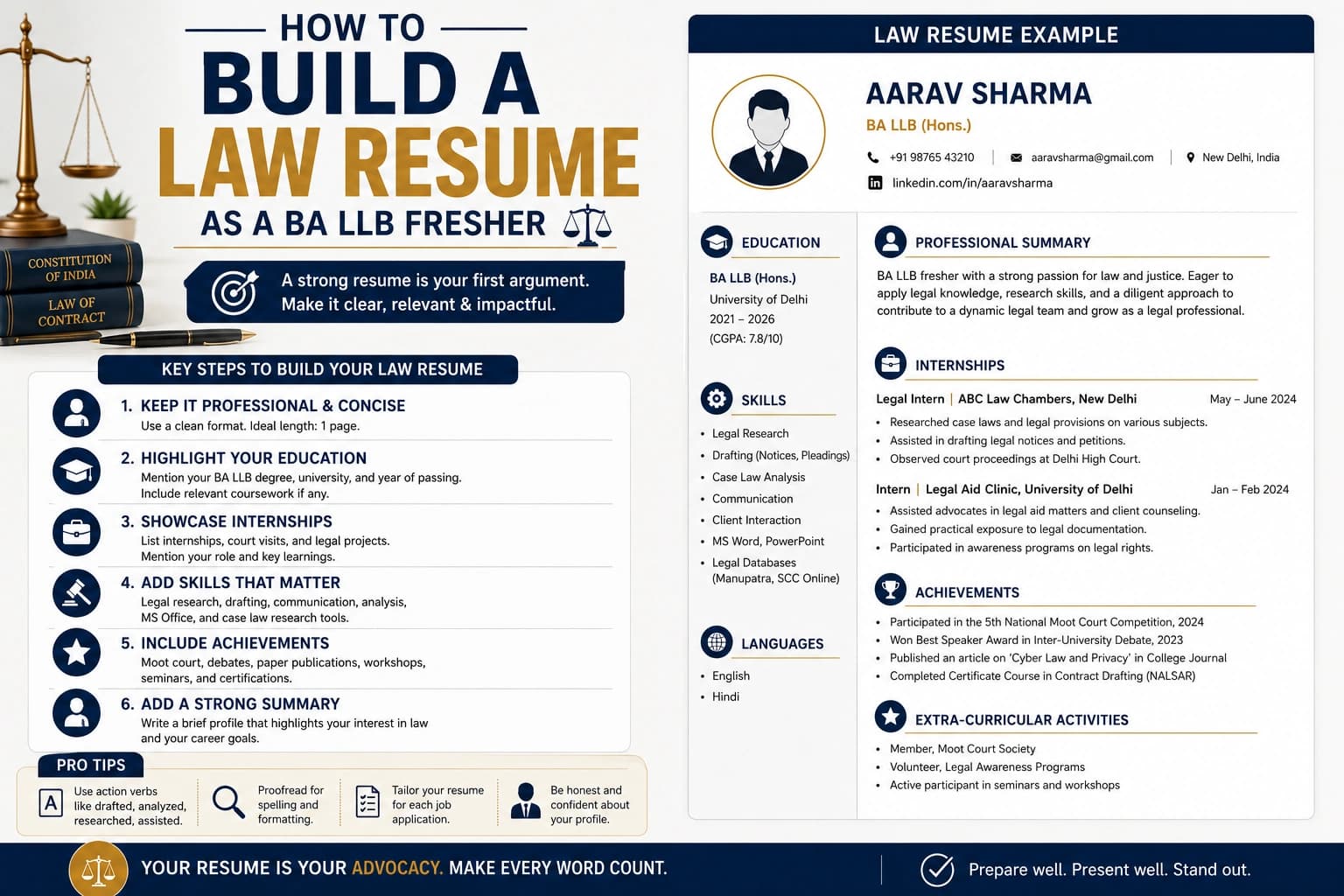
How to Build a Law Resume as a BA LLB Fresher
A practical, section-by-section guide to building a strong law resume as a BA LLB fresher — structure, internships, moot court, formatting, and mistakes to avoid.

How to Crack Law Firm Interviews After BA LLB
A practical, step-by-step guide to preparing for and cracking law firm interviews after BA LLB — common questions, technical rounds, and mistakes to avoid.
Most read on Vidyapun
- 1Best Universities for PhD in India Without Entrance Exam – 2026 Guide | Vidyapun.com
- 250 LLM Dissertation Topics in Corporate Law for 2026
- 3How Long Does a PhD Take in India? Full Timeline Explained
- 4Best Universities for PhD in Law in India (2026) – UGC Approved Colleges, Eligibility & Admission Guide
- 5Diploma Courses with Highest Salary in India
Comments
0No comments yet
Be the first to share your thoughts!
