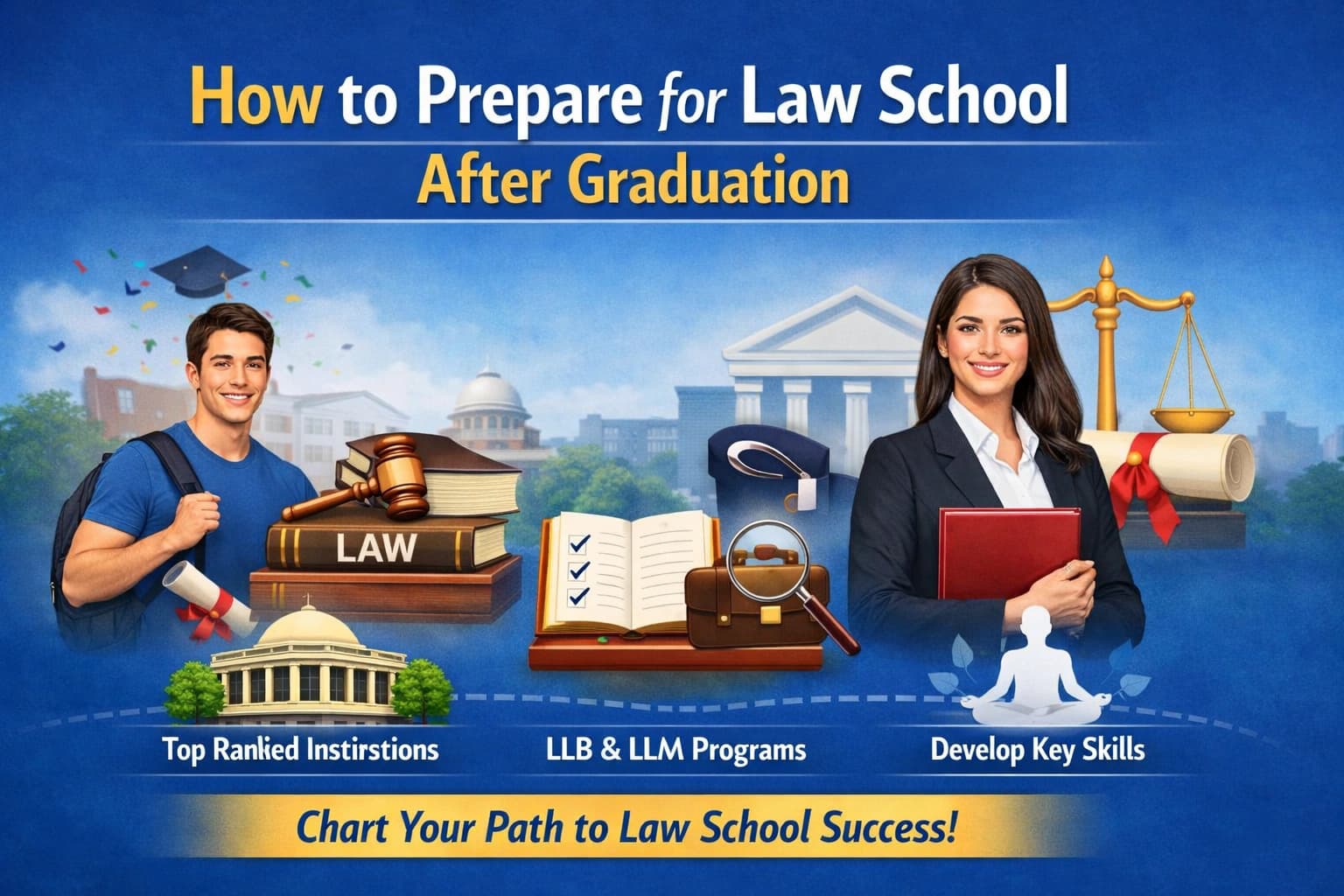
Thinking About a Career in Law?
Many graduates discover their interest in law only after completing a bachelor's degree. Whether you studied Arts, Commerce, Science, Management, or another discipline, pursuing legal education can open doors to careers in litigation, corporate law, public policy, legal consulting, compliance, and academia.
Starting law school after graduation may seem like a big transition, but with proper planning, the journey can be both rewarding and exciting. Understanding the admission process, strengthening key skills, and choosing the right university are essential steps toward building a successful legal career.
This guide will help you prepare confidently for law school and make informed decisions about your future.
Why Choose Law After Graduation?
A legal education develops analytical thinking, problem-solving abilities, communication skills, and a strong understanding of justice and governance. These qualities are valued not only in courts but also in businesses, government organisations, startups, financial institutions, and international agencies.
Students often choose law after graduation because they want to:
- Build a professional legal career.
- Explore corporate legal opportunities.
- Prepare for judicial services.
- Work in public policy.
- Pursue legal research and academics.
- Enhance career prospects in compliance and consulting.
Law offers diverse opportunities across multiple industries.
Is Law School the Right Choice for You?
Before applying, consider whether your interests align with the legal profession.
You may enjoy law if you:
- Like reading and analysing information.
- Enjoy solving complex problems.
- Have strong communication skills.
- Are interested in justice and public affairs.
- Can think critically and logically.
- Want a career with continuous learning and professional growth.
A genuine interest in legal studies often contributes to long-term success.
Understanding the Admission Process
Preparing early can make the admission journey much smoother.
Step 1: Identify Your Career Goals
Think about the type of legal career you want to pursue.
Possible career paths include:
- Litigation
- Corporate Law
- Government Services
- Legal Consultancy
- Compliance
- Legal Research
- Teaching
- Public Policy
Your career goals can help determine the most suitable law programme.
Step 2: Research Law Programmes
Graduates generally explore programmes such as:
- LLB
- Integrated postgraduate legal studies
- Specialised legal diploma programmes
- Higher studies after law
Compare universities carefully before making a decision.
Step 3: Check Eligibility Requirements
Every university has its own admission requirements.
Review:
- Educational qualifications
- Admission criteria
- Required documents
- Application timelines
Always verify the latest information directly with the institution before applying.
Step 4: Prepare Important Documents
Keep your documents organised before the admission process begins.
Commonly required documents include:
- Graduation Mark Sheets
- Degree Certificate
- Identity Proof
- Passport-size Photographs
- Address Proof
- Category Certificate (if applicable)
Proper documentation can help avoid delays.
Essential Skills Every Future Law Student Should Develop
Success in law school depends on more than academic performance.
Communication Skills
Law students regularly participate in discussions, presentations, drafting, and client interactions.
Reading Habits
Legal education involves reading judgments, legislation, research papers, and case studies.
Developing a habit of reading improves comprehension and legal understanding.
Analytical Thinking
Law requires the ability to evaluate facts, interpret rules, and apply legal reasoning.
Practising logical analysis strengthens problem-solving skills.
Research Skills
Legal professionals rely on research to understand statutes, precedents, and policy developments.
Learning effective research techniques early can be highly beneficial.
Time Management
Law school often involves multiple assignments, projects, and practical activities.
Organising your schedule helps maintain academic performance.
What to Expect During Law School
Law school combines classroom learning with practical exposure.
Students may participate in:
- Moot Court Competitions
- Legal Aid Clinics
- Research Projects
- Internships
- Workshops
- Seminars
- Group Discussions
- Case Analysis
These activities help students apply theoretical concepts in practical situations.
Choosing the Right Law University
Selecting the right university is an important decision.
Before applying, compare institutions based on:
Academic Reputation
Choose universities known for quality legal education.
Experienced Faculty
Faculty members play a significant role in mentoring students and encouraging research.
Practical Learning
Look for opportunities such as:
- Moot Courts
- Legal Clinics
- Internships
- Court Visits
Career Support
Universities with career counselling, placement assistance, and industry interaction can help students prepare for professional opportunities.
Common Challenges New Law Students Face
Many students experience similar concerns when entering law school.
Common challenges include:
- Understanding legal terminology.
- Managing a demanding reading schedule.
- Adapting to legal writing.
- Participating in public speaking.
- Balancing academics and internships.
These challenges become easier to manage with consistent effort and guidance.
Tips to Succeed in Law School
Students who perform well often develop positive academic habits.
Some useful tips include:
- Attend classes regularly.
- Read judgments and legal articles consistently.
- Participate in moot court activities.
- Complete internships whenever possible.
- Develop strong writing skills.
- Stay updated with legal developments.
- Build professional networks.
- Seek guidance from mentors and faculty.
Continuous learning plays an important role in legal education.
Career Opportunities After Law School
A legal education opens doors to many professional opportunities.
Graduates may explore careers as:
- Advocate
- Corporate Lawyer
- Legal Consultant
- Compliance Officer
- Legal Researcher
- Public Policy Professional
- Legal Advisor
- Academician
- Arbitration Specialist
- Government Legal Officer
Career progression depends on experience, professional skills, and ongoing learning.
Why Students Choose Vidyapun
Choosing the right university and understanding the admission process can feel overwhelming.
Vidyapun provides personalised guidance to help students make informed academic decisions.
Our Services Include
- Law Admission Guidance
- University Comparison
- Course Counselling
- Eligibility Assessment
- Documentation Support
- Career Guidance
- Admission Assistance
Our experienced counsellors help students identify suitable programmes and navigate the admission process confidently.
Frequently Asked Questions
Can I study law after completing graduation?
Yes. Graduates from recognised universities can generally pursue legal education through eligible law programmes, subject to university-specific admission requirements.
Is law a good career after graduation?
Law offers diverse opportunities in litigation, corporate organisations, public policy, government, legal consulting, research, and academia.
What skills are important before joining law school?
Strong communication, analytical thinking, reading habits, research skills, and time management are valuable for success in legal education.
How do I choose the right law university?
Compare universities based on recognition, faculty, curriculum, practical learning opportunities, internships, and career support.
Does Vidyapun help students with law admissions?
Yes. Vidyapun provides admission guidance, university selection support, documentation assistance, and career counselling to help students throughout the admission journey.
Author's Note
This article has been prepared by the Vidyapun Education Team to help students understand how to prepare for law school after graduation. Admission policies and eligibility requirements may vary across universities. Students should always verify the latest information directly with the respective institution before applying.
Conclusion
Preparing for law school after graduation is an exciting step toward a rewarding and intellectually challenging career. Success begins with understanding your goals, choosing the right programme, developing essential skills, and selecting a university that supports your aspirations.
By planning ahead and seeking reliable guidance, you can enter law school with confidence and build a strong foundation for a successful future in the legal profession.
Contact Us
Need expert guidance for admissions to UGC & BCI recognised universities?
Vidyapun is here to help you choose the right course, compare universities, and complete your admission process with confidence.
🌐 Website: www.vidyapun.com
📞 Call / WhatsApp: +91 96438 02216
Get in touch with Vidyapun today and take the next step toward a successful academic and professional career.