
A law degree provides students with strong theoretical knowledge, but practical exposure is equally important for building a successful legal career. Legal internships allow students to understand how laws are applied in real-world situations while developing professional skills that cannot be learned through classroom education alone.
Whether you plan to become an advocate, corporate lawyer, legal consultant, researcher, or compliance professional, internships provide valuable experience that helps bridge the gap between academic learning and professional practice.
What is a Legal Internship?
A legal internship is a structured learning opportunity where law students gain practical experience by working under legal professionals, law firms, corporate legal departments, government organisations, or legal aid institutions.
Internships help students understand legal procedures, professional ethics, client interactions, documentation, legal drafting, and courtroom practices.
Benefits of Legal Internships
Gain Practical Experience
Internships expose students to real legal work, allowing them to understand legal procedures, documentation, and case management beyond textbooks.
Improve Legal Research Skills
Students learn how to research statutes, judgments, regulations, and legal precedents using professional legal databases and resources.
Learn Legal Drafting
Drafting legal notices, agreements, contracts, petitions, and opinions is an essential skill developed during internships.
Build Professional Confidence
Working with experienced lawyers helps students improve communication, professionalism, and decision-making abilities.
Understand Court Procedures
Students interested in litigation gain firsthand exposure to courtroom practices, legal documentation, hearings, and judicial processes.
Explore Different Legal Fields
Internships help students identify which areas of law best match their interests and long-term career goals.
Where Can Law Students Do Internships?
Law students can gain experience through various organisations, including:
Law Firms
Learn litigation, documentation, client counselling, and legal research.
Corporate Legal Departments
Understand contracts, compliance, business regulations, and corporate governance.
Government Departments
Gain exposure to administrative law, public policy, and regulatory frameworks.
Legal Aid Organisations
Work on social justice initiatives while developing practical legal skills.
NGOs
Support legal awareness, human rights, and community development projects.
Research Institutions
Participate in legal research, policy analysis, and academic projects.
Skills You Develop During Internships
Internships strengthen both technical and interpersonal skills.
Important skills include:
- Legal Research
- Legal Drafting
- Communication
- Client Interaction
- Negotiation
- Case Analysis
- Teamwork
- Time Management
- Professional Ethics
- Problem Solving
These skills contribute to long-term professional success.
How to Make the Most of Your Internship
Students can maximise their internship experience by:
- Asking thoughtful questions
- Maintaining professionalism
- Completing assigned tasks on time
- Improving legal writing skills
- Taking notes on practical learning
- Seeking constructive feedback
- Building professional relationships
- Staying updated on legal developments
An active learning approach helps students gain meaningful experience.
Common Mistakes to Avoid
Avoid these common internship mistakes:
- Treating the internship as a formality
- Avoiding new responsibilities
- Ignoring professional etiquette
- Failing to ask questions
- Missing deadlines
- Neglecting legal research
- Not documenting learning experiences
Professional conduct and curiosity leave a positive impression.
Career Benefits of Legal Internships
Practical experience gained through internships can support careers such as:
- Advocate
- Corporate Lawyer
- Legal Consultant
- Compliance Officer
- Legal Researcher
- Public Policy Professional
- Contract Manager
- Legal Advisor
Internships also help students build professional networks and understand workplace expectations.
Why Choose Vidyapun?
Planning your legal education is the first step toward building a successful career.
Vidyapun supports students with:
- Law Admission Guidance
- University Comparison
- Course Selection Support
- Career Counselling
- Documentation Assistance
- Admission Guidance
- Higher Education Planning
We help students choose recognised universities and prepare for long-term professional success.
Frequently Asked Questions
When should law students start internships?
Many students begin internships during their law programme as opportunities become available, depending on university guidelines and personal readiness.
Are internships compulsory?
Some universities include internships as part of their curriculum, while others encourage voluntary practical experience. Requirements vary by institution.
Do internships improve career opportunities?
Practical experience helps students develop professional skills and better understand legal practice, which may strengthen future career prospects.
Can students intern in corporate companies?
Yes. Corporate legal departments often provide internship opportunities related to contracts, compliance, and commercial law.
How can Vidyapun help?
Vidyapun provides admission guidance, university comparison, career counselling, and educational support to help students make informed decisions about their legal education.
Author's Note
Reviewed by the Vidyapun Education Team
This article provides general educational guidance regarding legal internships. Internship opportunities, eligibility, and programme structures vary by institution and organisation. Students should verify current requirements directly with their university or internship provider.
Conclusion
Legal internships play a vital role in preparing students for the realities of the legal profession. By combining classroom knowledge with practical experience, internships help develop research, drafting, communication, and professional skills that are essential for long-term success. Students who actively participate in internships often gain greater confidence, industry exposure, and a clearer understanding of their future career path.
Website: www.vidyapun.com
Call / WhatsApp: +91 96438 02216
Connect with Vidyapun today to explore recognised law programmes and take the next step toward a successful legal career.
Free admission guidance
Tell us what you are looking for. A counsellor will call you.
Read next

BA LLB Campus Placements: What to Expect
A realistic guide to BA LLB campus placements — how the process works, what placement statistics actually mean, typical recruiters, and how to prepare.
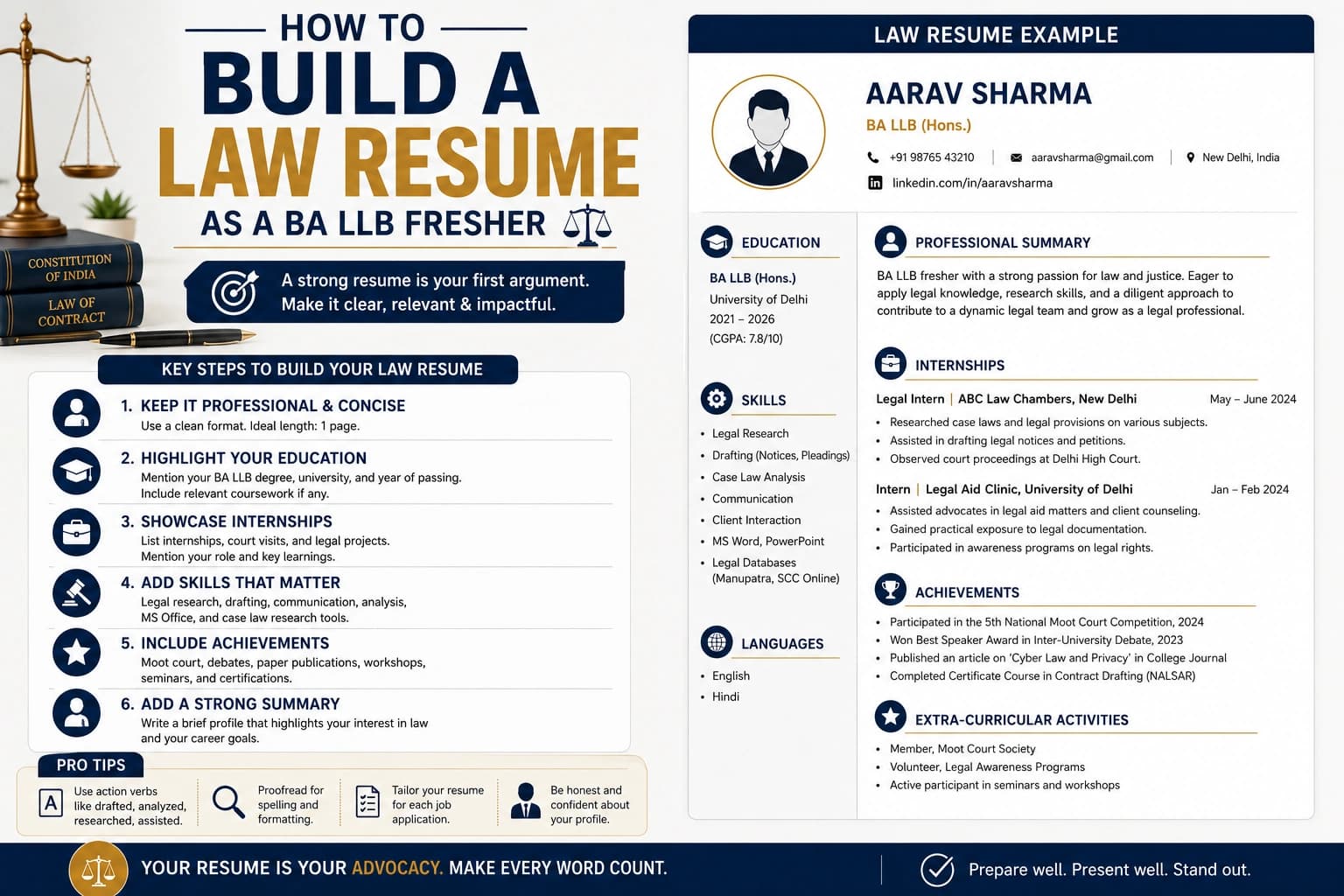
How to Build a Law Resume as a BA LLB Fresher
A practical, section-by-section guide to building a strong law resume as a BA LLB fresher — structure, internships, moot court, formatting, and mistakes to avoid.

How to Crack Law Firm Interviews After BA LLB
A practical, step-by-step guide to preparing for and cracking law firm interviews after BA LLB — common questions, technical rounds, and mistakes to avoid.
Most read on Vidyapun
Comments
0No comments yet
Be the first to share your thoughts!
