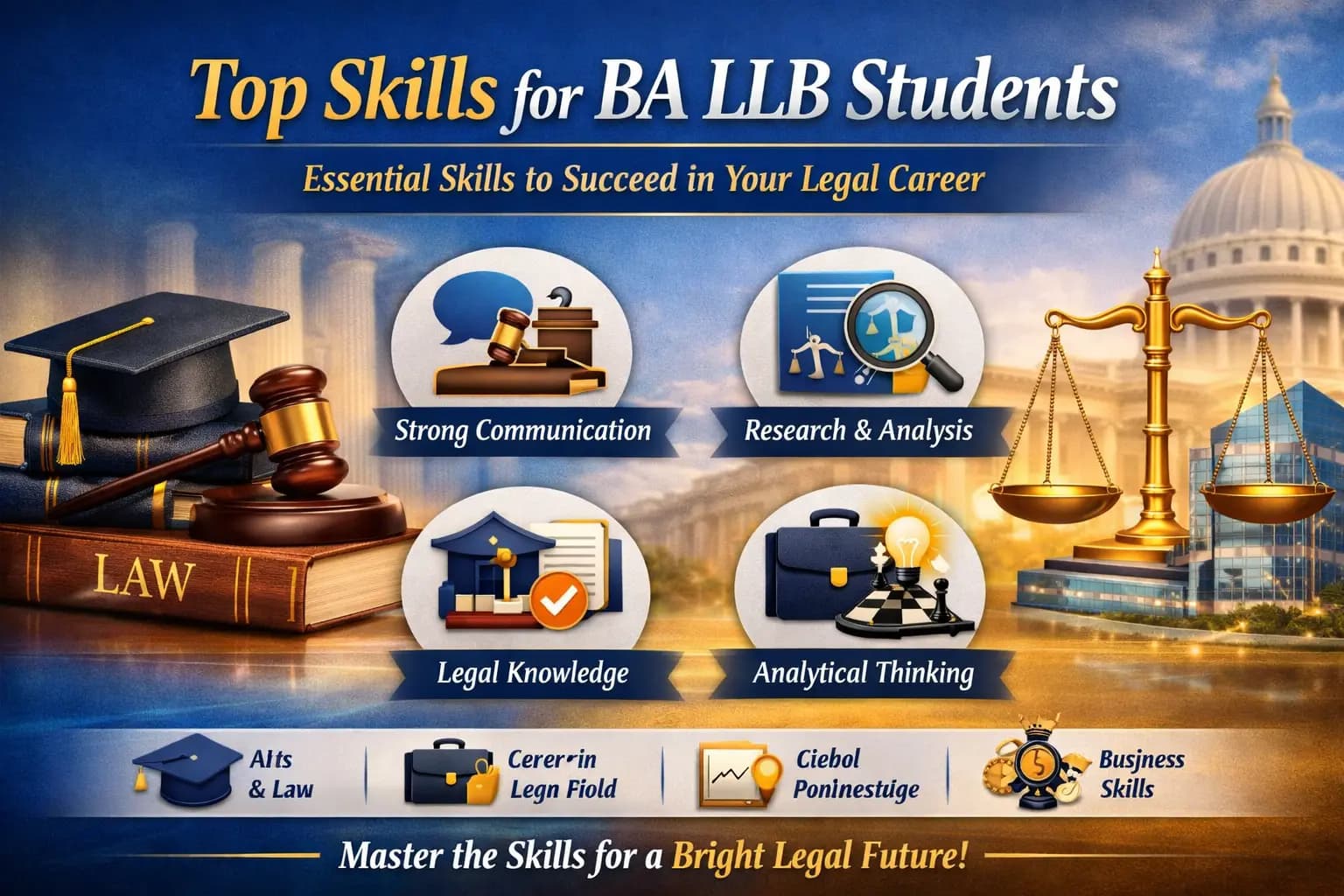
Pursuing a BA LLB degree is more than studying legal theories and constitutional provisions. Today's legal profession requires graduates who can combine academic knowledge with practical skills, ethical decision-making, and professional communication.
Whether your goal is to become an advocate, corporate lawyer, legal consultant, judicial officer, researcher, or legal advisor, developing the right skills during your academic journey can help prepare you for diverse career opportunities.
Building these competencies early not only improves academic performance but also supports long-term professional growth in an increasingly competitive legal industry.
Why Skills Matter in Legal Education
Modern legal practice demands professionals who can solve complex problems, communicate effectively, and adapt to changing legal environments.
Along with classroom learning, practical skills help students:
- Understand legal procedures
- Analyse real-life legal issues
- Build professional confidence
- Improve employability
- Prepare for internships and higher studies
A balanced combination of knowledge and practical ability is essential for every aspiring lawyer.
1. Legal Research Skills
Legal research forms the foundation of legal practice.
Students should learn how to:
- Analyse statutes
- Read judicial decisions
- Understand legal precedents
- Interpret legal provisions
- Use legal databases effectively
Strong research skills support litigation, corporate law, compliance, and academic careers.
2. Legal Drafting
Every legal professional prepares documents throughout their career.
Students should practise drafting:
- Legal Notices
- Agreements
- Contracts
- Petitions
- Affidavits
- Memorandums
- Legal Opinions
Effective drafting requires precision, clarity, and attention to detail.
3. Communication Skills
Communication is one of the most valuable skills in the legal profession.
Students should improve:
- Public Speaking
- Client Communication
- Professional Writing
- Presentation Skills
- Courtroom Communication
Clear communication helps lawyers explain complex legal concepts with confidence.
4. Critical Thinking
Law students frequently analyse multiple perspectives before reaching legal conclusions.
Critical thinking helps in:
- Case Analysis
- Legal Interpretation
- Decision Making
- Problem Solving
- Policy Evaluation
Developing this ability enables students to approach legal challenges logically.
5. Analytical Skills
Legal professionals regularly evaluate evidence, regulations, and legal arguments.
Analytical skills help students:
- Identify legal issues
- Compare legal principles
- Assess risks
- Recommend practical solutions
These skills are valuable across litigation, corporate law, and legal consulting.
6. Negotiation Skills
Many legal matters are resolved outside the courtroom.
Students should understand:
- Settlement discussions
- Conflict resolution
- Commercial negotiations
- Client representation
- Alternative dispute resolution
Negotiation contributes to effective legal practice in both litigation and corporate environments.
7. Time Management
Law programmes involve coursework, internships, research, and practical activities.
Students benefit from:
- Planning academic schedules
- Meeting deadlines
- Prioritising tasks
- Managing multiple responsibilities
Good time management supports academic and professional success.
8. Digital Literacy
Technology is transforming legal services.
Future lawyers should become familiar with:
- Legal Research Platforms
- Digital Documentation
- Online Legal Resources
- Virtual Communication
- Legal Technology Tools
Digital awareness complements traditional legal skills in modern practice.
9. Professional Ethics
Integrity remains one of the most important qualities for legal professionals.
Students should understand:
- Professional Responsibility
- Confidentiality
- Ethical Decision-Making
- Client Trust
- Fair Representation
Ethical conduct forms the foundation of a respected legal career.
10. Leadership and Teamwork
Legal professionals often collaborate with colleagues, clients, and organisations.
Leadership skills include:
- Decision Making
- Team Coordination
- Responsibility
- Adaptability
- Professional Collaboration
Developing leadership qualities can support future career advancement.
Practical Ways to Improve These Skills
Students can strengthen their abilities by participating in:
- Moot Court Competitions
- Legal Aid Clinics
- Internship Programmes
- Debate Competitions
- Research Projects
- Legal Writing Workshops
- Seminars and Conferences
- Student Law Societies
Practical exposure complements academic learning and helps students build confidence.
Career Opportunities for Skilled BA LLB Graduates
Developing professional skills prepares students for diverse career paths, including:
Advocate
Represent clients and handle legal proceedings in various courts.
Corporate Lawyer
Advise businesses on contracts, compliance, mergers, acquisitions, and regulatory matters.
Legal Consultant
Provide legal advice to organisations, institutions, startups, and individuals.
Compliance Officer
Ensure organisations follow legal and regulatory requirements.
Legal Researcher
Conduct research for universities, think tanks, policy institutions, and legal publishers.
Public Policy Professional
Contribute to governance, legislative research, and policy development.
Why Choose Vidyapun?
Choosing the right university and receiving proper guidance are important steps toward building a successful legal career.
Vidyapun supports students through:
- BA LLB Admission Guidance
- University Comparison
- Eligibility Assessment
- Documentation Assistance
- Career Counselling
- Course Selection Guidance
- Admission Support
Our experienced counsellors help students identify recognised universities that match their academic interests and career goals.
Frequently Asked Questions
Which skill is most important for BA LLB students?
Legal research, communication, legal drafting, analytical thinking, and ethical decision-making are among the most important skills for aspiring legal professionals.
Can practical skills improve career opportunities?
Yes. Practical skills developed through internships, moot courts, research, and legal writing complement academic knowledge and prepare students for professional roles.
Why is communication important in law?
Lawyers regularly interact with clients, colleagues, courts, and organisations. Effective communication helps present legal arguments clearly and professionally.
Does technology play a role in legal careers?
Yes. Legal professionals increasingly use digital tools for research, documentation, communication, and case management.
How can Vidyapun help BA LLB aspirants?
Vidyapun provides expert guidance on university selection, admissions, eligibility, documentation, and career planning for students pursuing legal education.
Author's Note
Reviewed by the Vidyapun Education Team
This article is intended for educational purposes and provides general guidance on the skills required for BA LLB students. Skill development depends on individual learning, practical exposure, and continuous professional growth. Students should seek opportunities for internships, workshops, and practical training alongside their academic studies.
Conclusion
A BA LLB degree provides the academic foundation for a legal career, but developing practical skills is equally important. Strong communication, legal research, drafting, critical thinking, ethical conduct, and digital literacy can help students succeed in litigation, corporate law, compliance, public policy, and many other legal fields. By combining classroom learning with practical experience, aspiring lawyers can build a rewarding and future-ready career.
Website: www.vidyapun.com
Call / WhatsApp: +91 96438 02216
Start your legal journey with Vidyapun and receive expert guidance to choose the right BA LLB programme, compare recognised universities, and prepare for a successful career in law.